

My Role
Product Designer
Team (2)
Developer (1)
Timeline
2025.07-2025.09
(Discovery / MVP)
Design Responsibilities
Research, Flow design, Interface design, Testing
Leadership / Collaboration Responsibilities
Stakeholder management
Team alignment

1 | Context & Challenge
Sales workflows broke down because key customer info lived across calls, notes, messages, and email.
This scattered reality made automation hard and adoption even harder, which opened the door for an AI layer designed for clarity, structure, and trust.
Too much admin work drains sales time, focus, and team efficiency.
Time wasted on admin and non-selling tasks/week
(Forrester, 2023)
14hr
72%
Non-selling activities can take up to
(Salesforce, 2021)
As part of an internal pilot, we designed a customized AI-powered lead management tool for sales reps.
I led the early research to uncover workflow pain points, then helped align the emerging AI prototype with real user needs, redefining workflows and addressing trust in automation.
This wasn’t an AI-first project, it evolved into AI as we uncovered where automation truly helped human workflows.

HIGH-FIT INDUSTRIES
Solution-sales verticals vary widely in complexity. We segmented the market to identify where automation delivers the highest ROI, industries with high customization complexity, heavy consult load, and higher deal value.

2 | Research & Insights
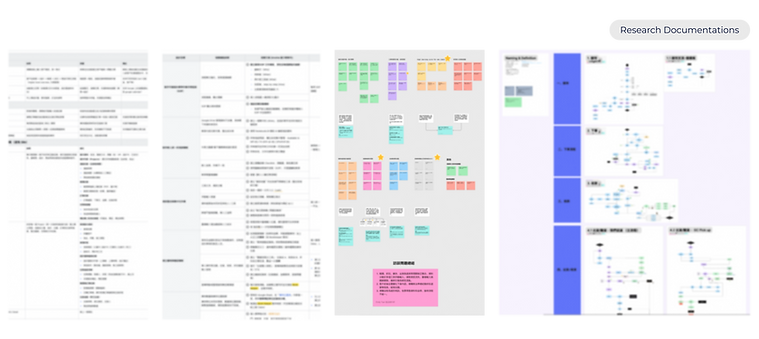
FROM FIELD OBSERVATIONS TO INSIGHTS
We interviewed sales representatives and observed their daily lead management workflow. What we found later informed the design of the AI-powered prototype.

3 | Design Goals & Principles
CHALLENGE
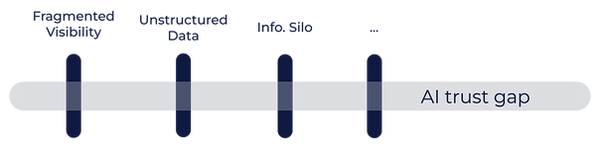
As AI introduced new ways to make sales tools smarter and more supportive, it also exposed a cross-cutting challenge — TRUST.
Balancing automation with human control became the core design goal across all pain points.
4 | Solution Designs

1. A UNIFIED SOURCE OF TRUTH
Disconnected tools and inconsistent updates made lead tracking difficult. We unified all lead sources into one centralized system — a single source of truth that reduced tool-switching and aligned the team around every lead.

CENTRALIZED LEAD CREATION & MANAGEMENT
We unified all lead creation channels — Chat apps, email, iMessage, manual logs, and in-store visits — into one interface with voice-to-text support, enabling quick, seamless lead capture and tracking.


2. DIKW MODEL X PROGRESSIVE DISCLOSURE
We mapped the sales workflow using the DIKW model, aligning data presentation with user intent.
Through progressive disclosure, users see only what’s relevant at each step, from quick note capture, to dashboards, task lists, and AI insights.
This structured flow progressively turns scattered data into contextual, actionable knowledge.


OPTIMIZE THE DATA-TO-ACTION FLOW
Aligning data flow with user behavior enables seamless capture, review, and execution. The goal is to reduce context switching and
make the Data → Action transition effortless.


3. HUMAN IN THE LOOP
We introduced AI to lighten manual work, but trust remained a barrier.
To address skepticism toward AI autonomy, we designed the system to be transparent and operationally reversible, allowing users to stay in control at every step.

TRANSPARENCY
Transparency ensures the AI never becomes a black box. We designed the system so its reasoning stays visible, predictable, and easy to follow, helping users stay in control throughout the workflow.


OPERATIONAL REVERSIBILITY
Reversibility ensures AI never locks users in. Every output can be adjusted or regenerated, keeping control in human hands while still gaining speed
from automation.


5 | Testing & Impact


Testing highlighted two important needs: stronger team-level visibility for managers, and better support for helping users bridge from their current mental models to AI-driven workflows.
These insights shaped the next phase, strengthening team collaboration and improving mental-model alignment so AI Agent acts as an enabler rather than an unpredictable partner.
6 | Learning & Next Step
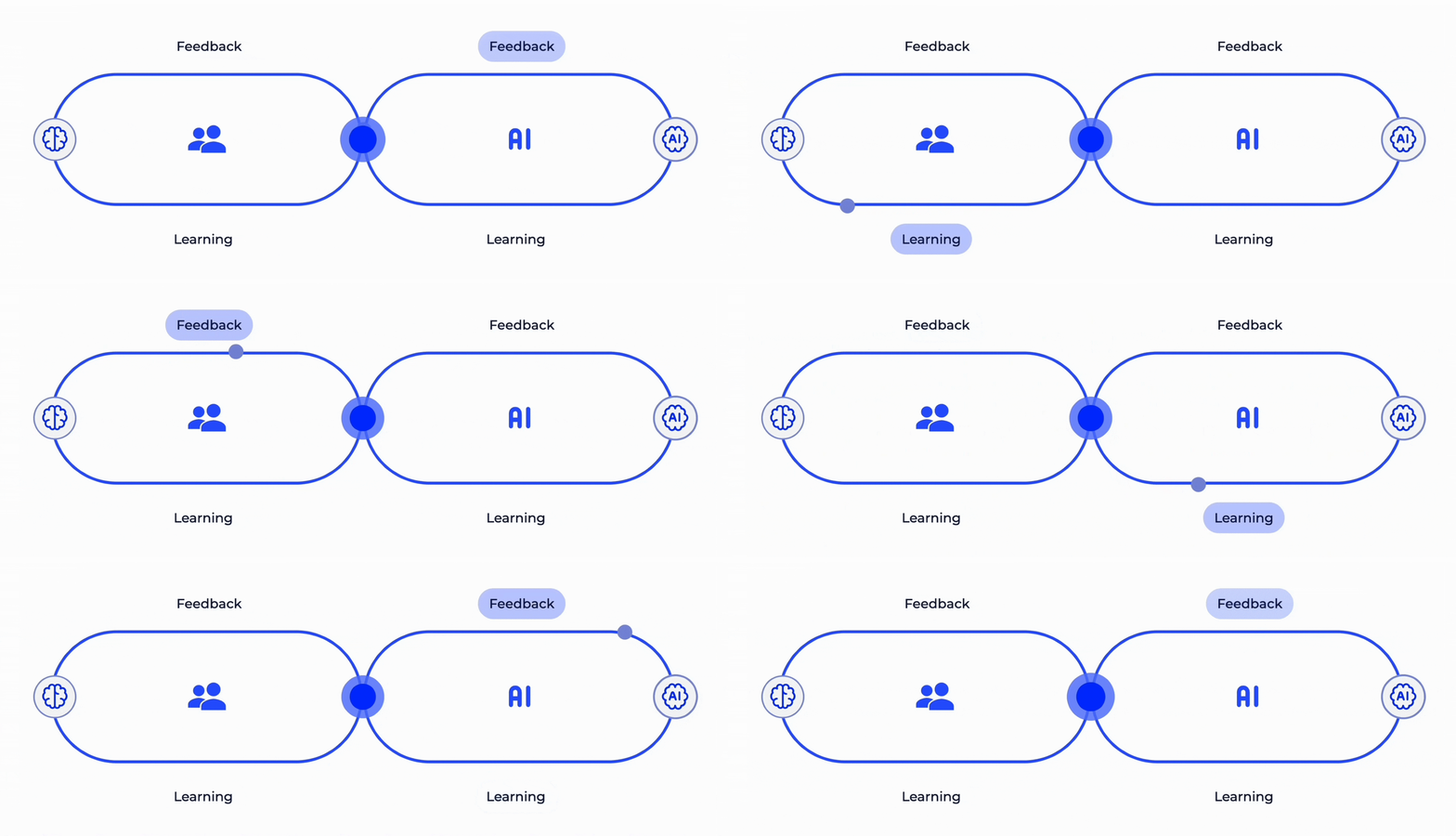
What I didn’t expect to learn was how much designing for AI agents is really about people. Most conversations about AI today focus on improving the model (helping it learn faster and adapt to human behavior) but this project taught me that adaptation goes both ways.
As the model shifts and evolves in real time, humans are also adjusting. We’re moving from static tools to dynamic systems, and that transition challenges our existing mental models.
My biggest takeaway is that Human–AI collaboration isn’t a destination; it’s a relationship. And like all relationships, it requires clarity, patience, and a design that helps both sides meet in the middle.
Ultimately, the role of design is not just shaping what the AI outputs, but guiding the mutual learning that allows suggestions to become collaboration, and helping both sides grow together.